Build around one surface
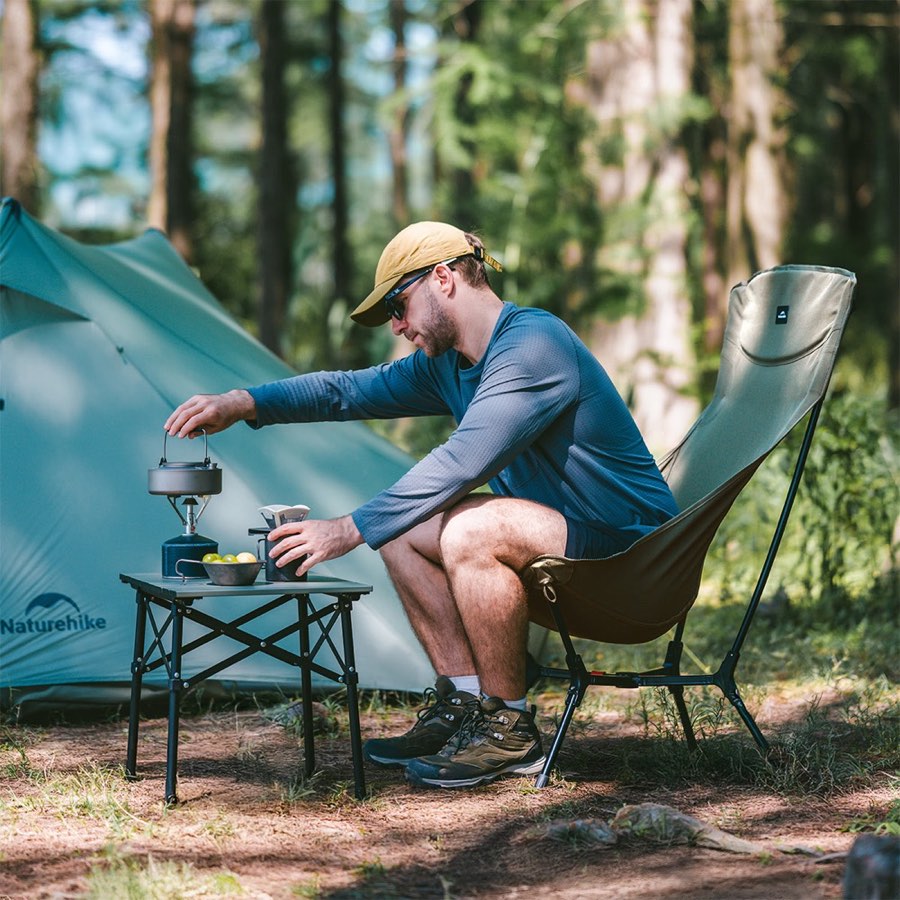
The single biggest upgrade to camp cooking isn't a better stove — it's a stable, waist-height surface you can leave assembled. Once you have that, everything else becomes a module: burner on the left, cutting board in the middle, wash bin on the right. Crouching over a picnic table bench is why people quit cooking outside.
Two burners, one fuel
Standardise on a single fuel type across your stove, lantern and heater. Mixed canisters are how you end up with four half-empty cylinders and no way to know which one has gas in it. Butane-propane blends work down to about 20°F if you keep the canister warm; below that, switch to liquid fuel and stop pretending.
Pack the way you cook
Store the kit in the order it gets used: coffee on top, dinner in the middle, cleaning at the bottom. A hard-sided kitchen box with a fold-out shelf beats a soft duffel because it becomes furniture at camp instead of a bag you keep reopening.
Cleaning without a sink
Two collapsible bins, one hot with a drop of biodegradable soap, one cold rinse. Scrape into the trash first — grey water attracts everything you don't want in camp. Ten litres of water handles dinner and breakfast for four people if you're deliberate about it.
The four-minute pack down
Test your system in the driveway with a timer. If breaking down the kitchen takes longer than pitching the tent, you have too many parts. Ours: burner off and cooling, board and knives into the lid, bins nested, box shut. Four minutes, and it fits behind the driver's seat.