
Eyewear without
the four-times markup.
Cloubay was started in 2016 by two frame engineers and an optician who were tired of watching a $28 frame reach the shelf at $290.

The short version
We own the bit in the middle.
Most eyewear passes through a licensor, a distributor and a retail chain before anyone tries it on. Each takes a margin, and none of them made the frame.
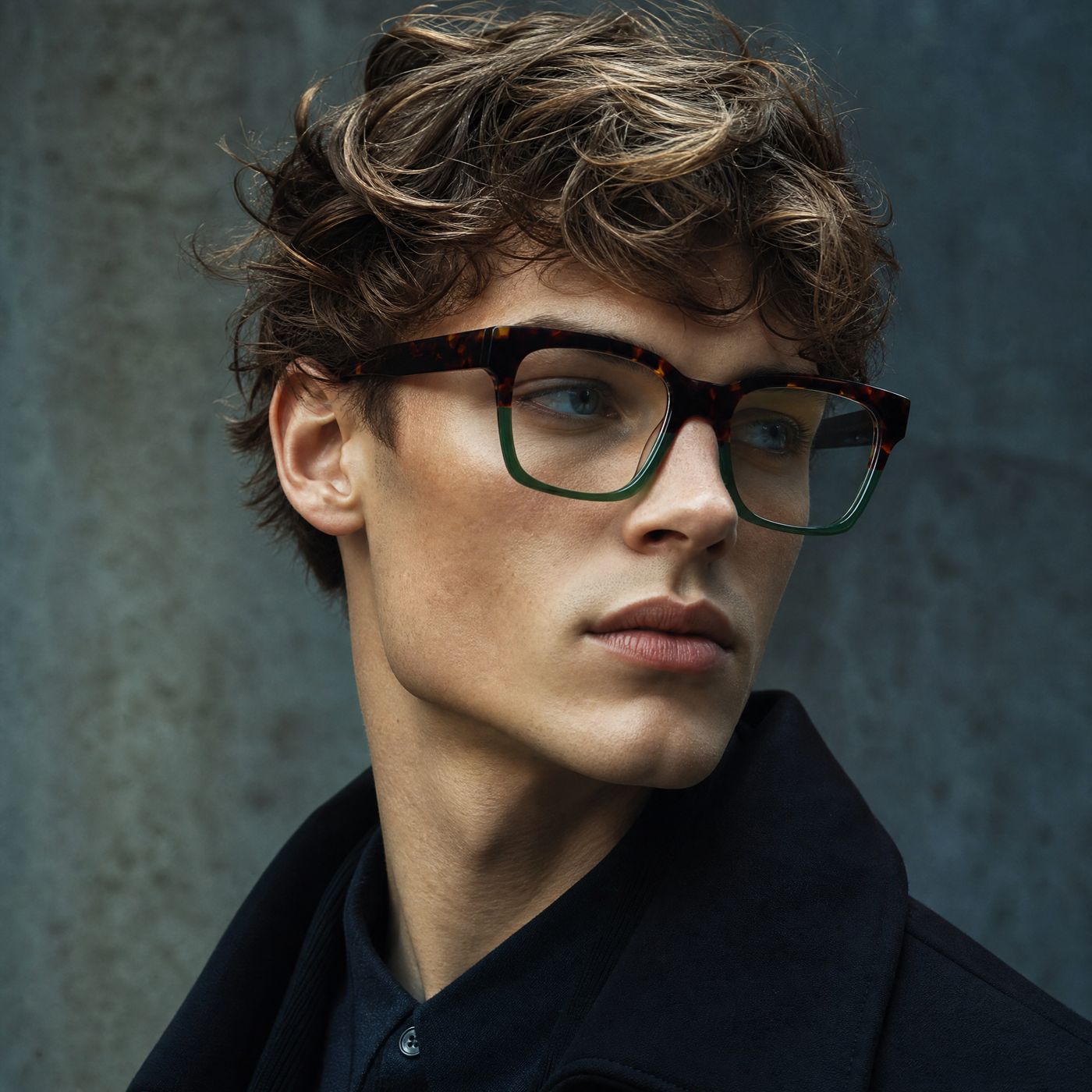
We cut out all three. Our frames are pressed, tumbled and hand-polished in our own workshop in Wenzhou, finished with Italian acetate from Mazzucchelli, and shipped straight from our hubs in Wenzhou, Rotterdam and New Jersey.
That is the whole trick. It is why a hand-polished acetate frame with prescription lenses costs $129 here instead of $420 in a mall.
The workshop
Forty-one steps, most of them by hand.
A Cloubay acetate frame starts as a solid sheet from Mazzucchelli in Castiglione Olona. It is milled, the temples are wired with a steel core, and the whole thing goes into a tumbling drum with beech chips for seven days.
Nothing about that is fast, and no machine does it better. It is also the difference between acetate that stays warm and glossy for years and injection-moulded plastic that chalks over in a season.
- Mazzucchelli bio-acetate, milled from solid block
- Steel-core temples, five- or seven-barrel hinges
- Seven-day beech-chip tumble, then hand polish
- Every frame aligned on an optical bench before packing
Our promise
If it breaks in two years, we fix it or replace it.
No receipt hunting, no wear-and-tear arguments. Send us a photo and we will sort it out.

Responsibility
Less waste, honestly measured.
Acetate offcuts go back to the mill to be re-pressed rather than landfilled. Cases are recycled paper board with a cotton sleeve — no foam, no plastic clamshells.
Every order ships carbon-offset through our freight partners, and our packaging is plastic-free end to end. We publish what we cannot yet fix, too: our lens coatings and hinge screws are not recycled content, and we are working on both.
Ask us anythingFrom the collection